
Professional Solutions for Common Auto Body Repair Issues in Indianapolis
Indianapolis, United States - January 26, 2026 / Tom Wood Collision /
Indianapolis, IN - Tom Wood Collision Center outlines how professional auto body repair addresses everyday vehicle damage before it progresses into more extensive problems. Minor dents, scratches, and paint chips can appear superficial, but untreated damage often worsens over time. The guidance clarifies how trained technicians evaluate damage, prioritize necessary repairs, and apply systematic methods to correct issues that everyday wear can conceal.
Many drivers postpone action on minor body damage because of uncertainty about repair needs. However, certain types of surface damage expose metal, break protective coatings, and accelerate rust formation when left unattended in varying weather conditions. The information shared by the auto body repair shop in Indianapolis offers context that helps vehicle owners make informed decisions based on repair urgency rather than cosmetic appearance alone.

Identifying Damage That Needs Repair
Visual Indicators Beyond Surface Wear
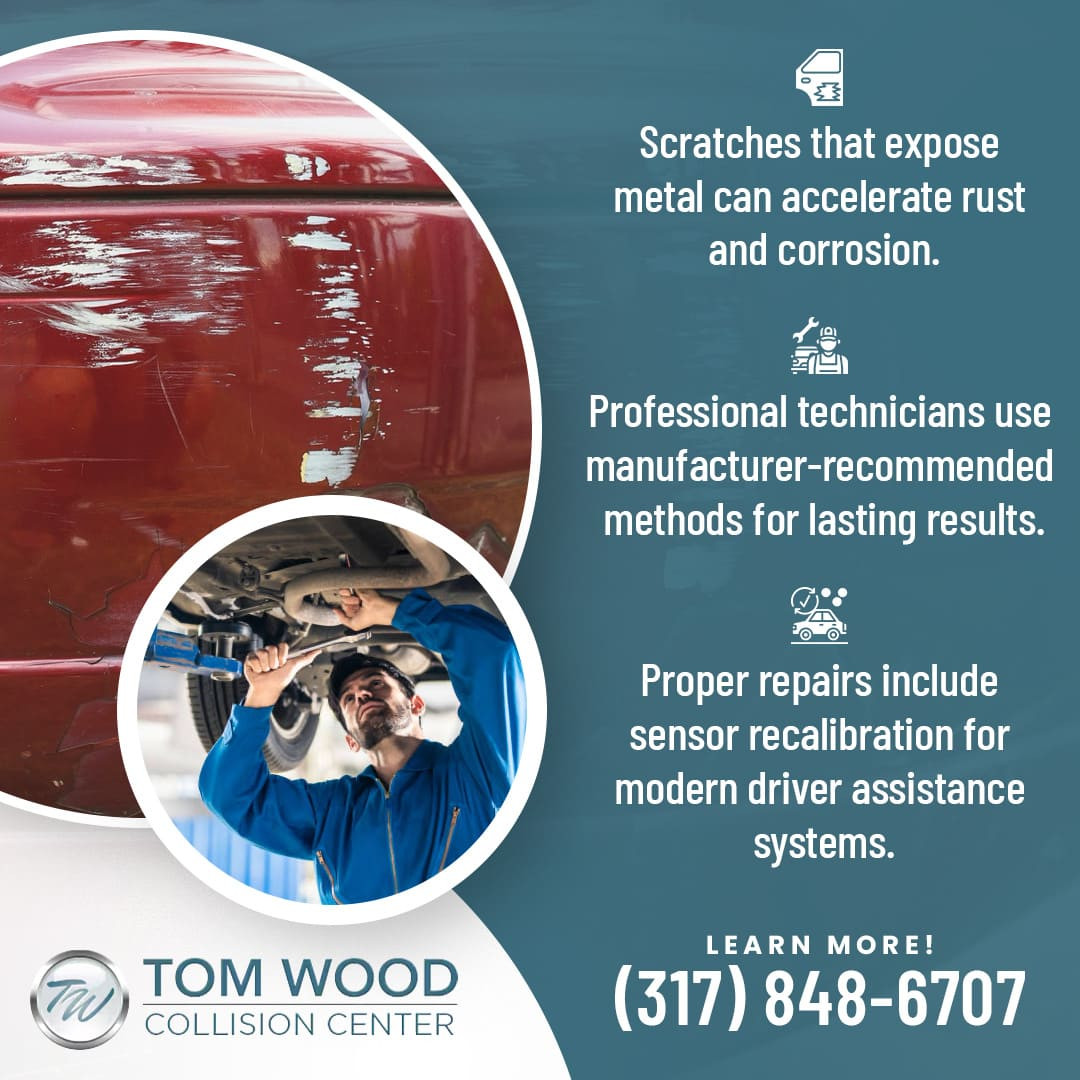
Small dents and scratches may appear harmless, but can compromise vehicle panels or expose bare metal. When paint is chipped or cracked, water and road salt penetrate protective layers, accelerating corrosion.
Shallow dents affecting panel alignment or scratches that reveal white, gray, or metal tones indicate stress to the structure. Paint cracking around dents often signals areas where moisture can enter, weakening finishes and potentially expanding corrosion beneath the surface.
Understanding Wear Versus Repair
Normal wear, such as light oxidation or swirl marks from washing, does not typically need repair. But damage that reaches through paint layers or impacts panel shape creates conditions for long-term deterioration.
Hoods, roofs, and trunk lids collect more moisture and sunlight exposure, making horizontal surface damage more vulnerable. Quick action is especially important for these areas to avoid progressive breakdown.
Evaluating Repair Priorities
Damage Characteristics and Exposure
Professionals determine urgency based on location, material exposure, and potential for worsening. Exposed metal, structural dents, and horizontal panel damage typically require faster repair. Meanwhile, bumper scuffs and clear coat scratches that don’t reach the base layer may allow for delayed scheduling.
Trained technicians examine depth, impact location, and moisture risk to help owners decide which areas to fix immediately and which to monitor.
Documented Evaluations
A proper inspection includes identifying hidden damage and documenting it before repairs begin. This supports accurate estimates and insurance coordination. Missing early-stage rust or hidden misalignment can result in secondary repairs if left unchecked.
How Repair Facilities Address Damage
Material-Specific Techniques
Modern repair centers use specialized tools based on vehicle construction. Digital systems help verify frame measurements and realign panels. Welding tools and methods vary depending on materials such as aluminum or high-strength steel, reducing risks during correction.
Paint is applied in climate-controlled booths to maintain proper temperature and humidity, which helps coatings bond and dry consistently. These conditions support both visual consistency and long-term performance.
Calibration and Restoration
Vehicles with driver assistance systems often need sensor recalibration after auto body repairs. Shops with the proper tools adjust these systems after panel replacements or bumper repairs that may affect radar or camera positions.
Preventing Future Complications
Procedural Accuracy
Auto body repair shops that follow the manufacturer's repair instructions reduce the chance of recurrence. These procedures outline correct sectioning points, welding specifications, adhesive use, and part replacement thresholds. Rushed repairs or deviations can trap moisture or leave structural elements undercorrected.
Surface preparation, paint layering, and proper cure times are also critical to protect against peeling, cracking, and corrosion return. Following defined steps helps maintain vehicle safety and appearance.
Insurance Support
Well-documented damage reports and in-process photos assist with supplement approvals when additional damage is found during disassembly. Repair shops familiar with insurance processes reduce delays and help align claim coverage with actual repair needs.
Local Access Encourages Timely Repairs
Having access to auto body repair nearby supports timely assessment. Local repair centers allow for in-person inspection and real-time discussions, removing hesitation caused by remote estimates or scheduling barriers. Quick evaluations help drivers determine whether action is needed or if an issue can wait. It also supports communication throughout the repair timeline.
Returning to a local auto body repair shop enables technicians to reference past work and apply that context to new damage. This continuity improves evaluation accuracy and repair planning.
Tom Wood Collision Center’s Approach to Auto Body Repair in Indianapolis
Tom Wood Collision Center applies manufacturer-recommended repair methods to address both visible and underlying damage. The facility uses advanced inspection tools, material-specific repair techniques, and climate-controlled paint environments to deliver consistent outcomes.
Trained technicians assess the full scope of damage, both surface-level and structural, before recommending repair strategies based on severity and exposure risk. With experience across a wide range of vehicle makes, Tom Wood Collision Center supports drivers throughout the Indianapolis area seeking reliable, process-driven auto body repair near them.
To request an evaluation or discuss repair needs with Tom Wood Collision Center, contact (317) 848‑6707. The facility provides manufacturer-compliant procedures, accurate documentation, and clear communication throughout the repair process.
Contact Information:
Tom Wood Collision
9727 Bauer Dr E
Indianapolis, IN 46280
United States
Joshua Piccione
(317) 848-6707
https://www.tomwoodcollision.com/


Original Source: https://www.tomwoodcollision.com/blog/2026/january/8/professional-solutions-for-common-auto-body-repair-issues-in-indianapolis.htm